
There was a time in our house when the kids could turn on the TV and immediately see our YouTube search history.
Chickens. Rabbits. Building fences. Goats. There was definitely a trend.
This time, the search history was full of pigs.
Chris tried to surprise the kids one day.
“Guess what we’re doing?”
They already knew.
Apparently, we’d given ourselves away.
Before bringing pigs home, we watched what felt like every YouTube video we could find.
We learned about different breeds, how quickly they grew, what they ate and the environments where they did best.
Our farm doesn’t look like a lot of the farms we were watching.
We have pasture, but we also have a lot of woods. We knew from the beginning that we wanted our pigs living outside, where they could root, forage, explore and behave like pigs—not spend their lives inside a barn.
Eventually, two breeds kept getting our attention:
Mangalitsa and Red Wattle.
The Mangalitsa was an easy sell.
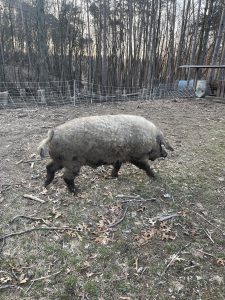
They’re fluffy!
Seriously, have you seen one?
But underneath all that hair is a traditional fat-type pig known for producing an incredible amount of fat.
As someone who loves to cook, that caught my attention.
Lard for frying. Leaf lard for baking. Fat for sausage making. And pork with enough intramuscular fat that it didn’t resemble the lean pork chops I’d grown up eating.
A chef’s dream.
Red Wattles caught our attention for a different reason.
They’re hardy, active foragers that do particularly well in outdoor and pasture-based systems. They’re also known for being excellent mothers and producing well-marbled, flavorful pork. The breed has a surprisingly good growth rate for a heritage pig, too.
In other words, Red Wattles checked a lot of boxes for the kind of farm we were building.
For the land we had and the way we wanted to raise pigs, both breeds made sense.
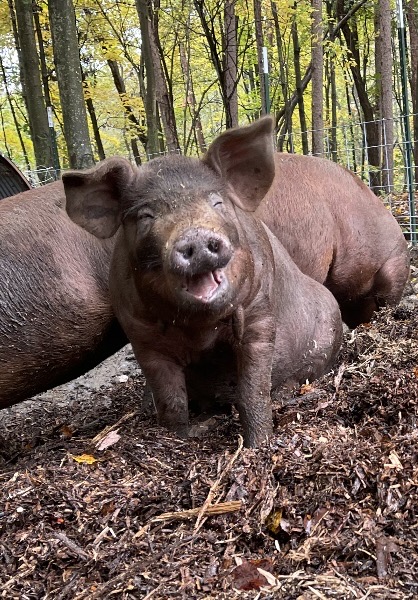
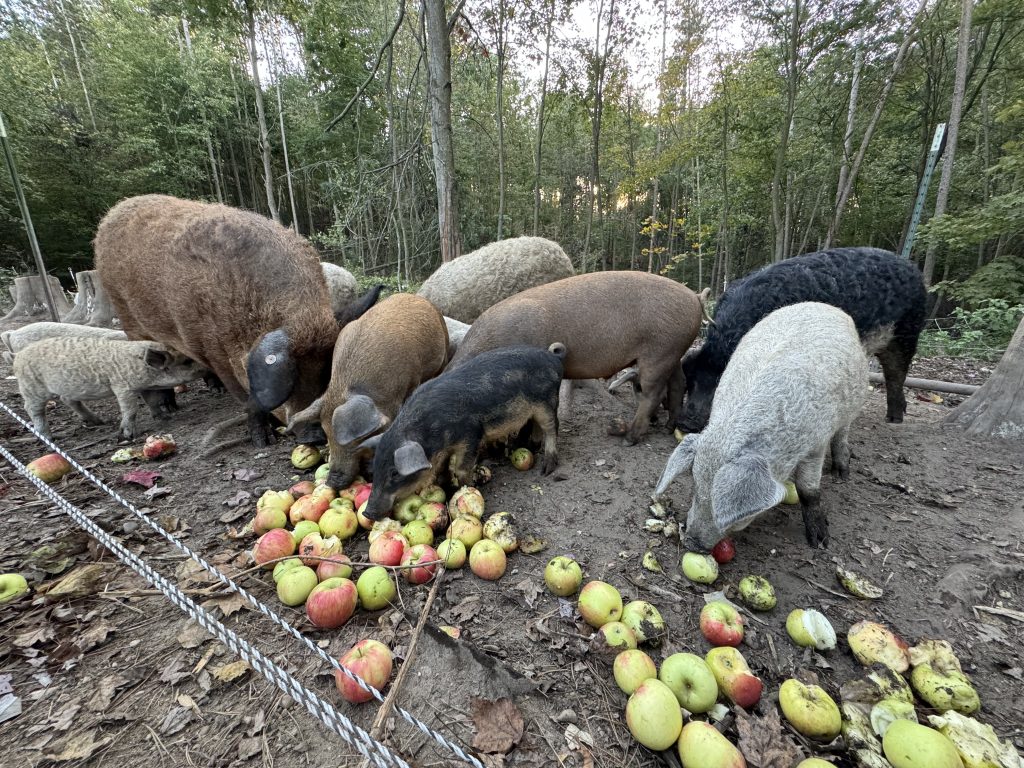
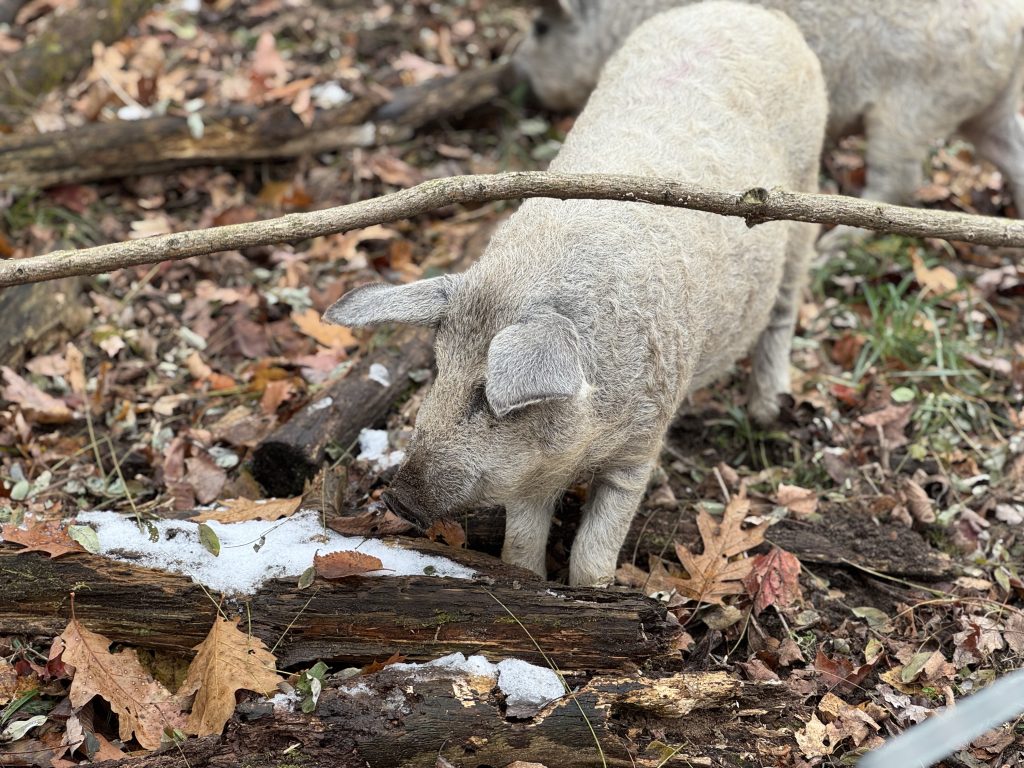
One thing we’ve learned is that not every pig grows on the same timeline.
Pure Mangalitsa especially require patience on our farm. They’re traditional fat-type pigs, and producing all that beautiful fat takes time.
Our pigs aren’t on the same timeline as conventional commodity pork. Depending on their genetics, the individual pig and the growing conditions, we may feed and care for them for many months before they’re ready for processing.
Pure Mangalitsa are especially slow for us, which has become one of the reasons we’re moving toward a Mangalitsa × Red Wattle cross.
Red Wattles bring something different to the equation. They still have the hardiness, foraging ability and mothering traits we value, but they generally grow more quickly and produce a different balance of meat and fat.
That’s what makes crossing the two so interesting to us.
We’re not simply trying to make our pigs grow faster.
We’re trying to find the balance between the qualities we love about the Mangalitsa and the qualities the Red Wattle brings to our farm.
Modern commercial pigs have been selected heavily for efficient growth and lean meat production. Traditional breeds were developed and preserved for a wider variety of traits, including hardiness, adaptability, mothering ability, foraging and the quality of the pork they produced.
They weren’t developed to win a race to the butcher.
When we finally got our first pork back, I understood why people get so excited about heritage pork.
I wasn’t much of a pork fan growing up.
I grew up during the era of:
“Pork. The Other White Meat.”
And that’s exactly how I remembered it.
Pale. Lean. And, if you weren’t careful, incredibly dry.
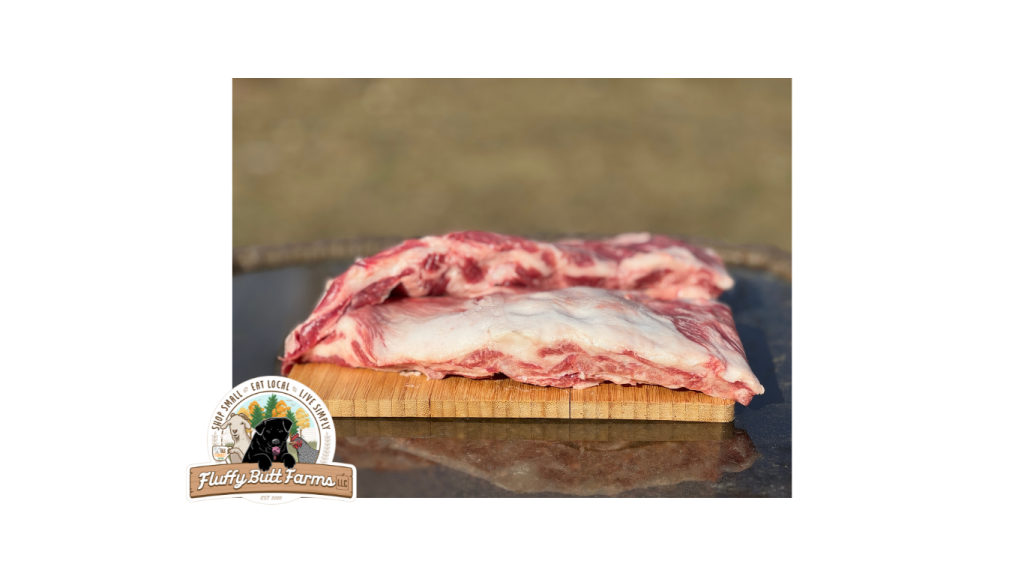
So when we got our first heritage pork back from the butcher and I saw the pork chops, my mind was blown.
They were red.
Not grocery-store-pork pink.
The meat was darker and richer looking. It almost reminded me of beef.
And then there was the fat.
The chops had the kind of visible fat and marbling that made me want to get a cast-iron skillet hot immediately.
The pork I grew up eating taught me what I thought pork was supposed to look like.
Raising heritage pigs taught me that pork can look very different.
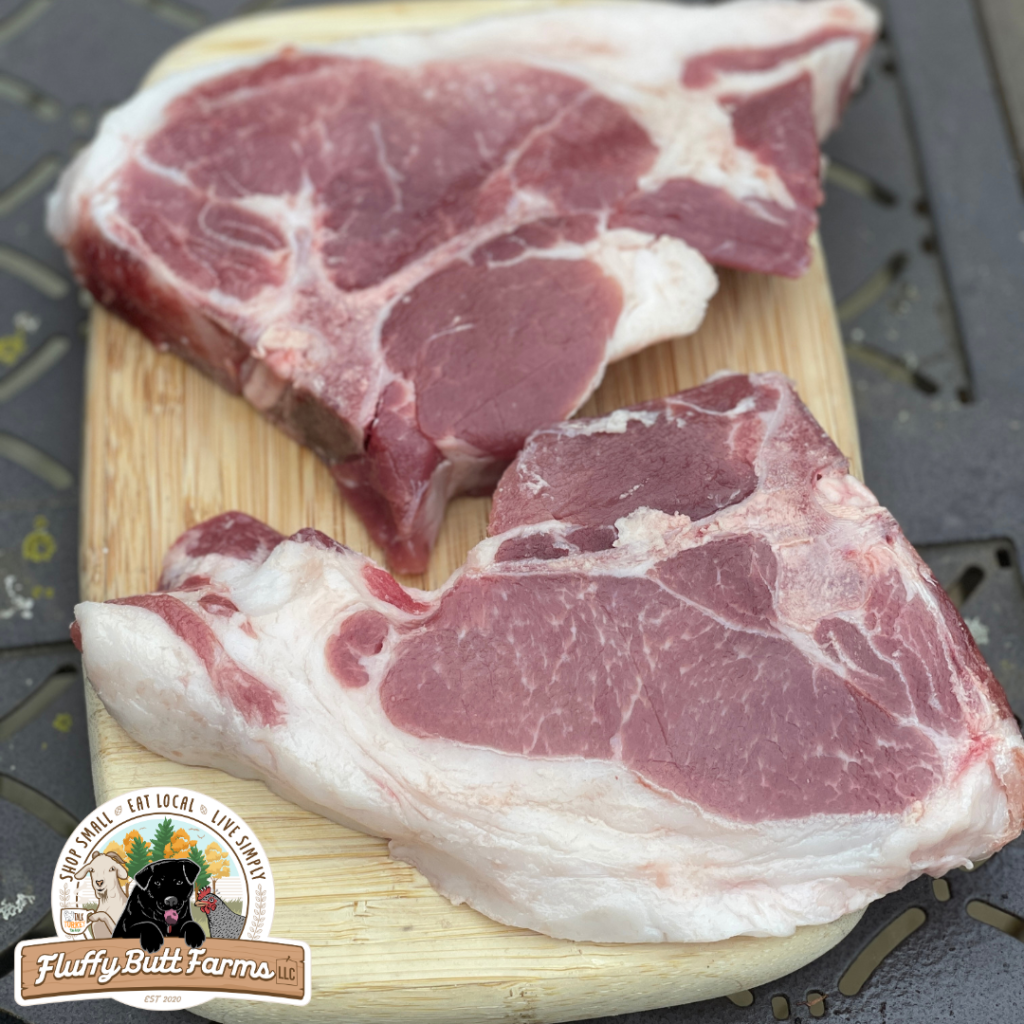
Pork isn’t one universal shade of pale pink.
One of the major influences on meat color is myoglobin, a protein in muscle that stores oxygen. Myoglobin is the primary pigment responsible for pork’s red color. Generally, more myoglobin means darker, redder meat.
Genetics can affect myoglobin concentration, which means breed can influence the color you see on your plate. Age, activity, diet, muscle type, processing and other factors can also affect a piece of pork’s final appearance.
Color alone doesn’t tell the entire story, but it was one of the first visible clues that the pork we were raising was different from what I remembered.
Then we cooked it.
The flavor was richer. The fat helped the meat stay juicy. It tasted like pork—not simply a lean piece of meat waiting for seasoning or sauce to give it a personality.
That was the moment I started rethinking what pork could be.
Pork isn’t one universal shade of pale pink.
One of the major influences on meat color is myoglobin, a protein in muscle that stores oxygen. Myoglobin is the primary pigment responsible for pork’s red color. Generally, more myoglobin means darker, redder meat.
Genetics can affect myoglobin concentration, which means breed can influence the color you see on your plate. Age, activity, diet, muscle type, processing and other factors can also affect a piece of pork’s final appearance.
Color alone doesn’t tell the entire story, but it was one of the first visible clues that the pork we were raising was different from what I remembered.
Then we cooked it.
The flavor was richer. The fat helped the meat stay juicy. It tasted like pork—not simply a lean piece of meat waiting for seasoning or sauce to give it a personality.
That was the moment I started rethinking what pork could be.
“Heritage” isn’t simply another word for pasture-raised.
Pasture-raised describes something about how an animal lives. Heritage refers to the traditional breeds and genetics behind the animal.
The Livestock Conservancy’s definition of heritage swine includes true genetic breeds with established histories and conservation importance. Its definition of heritage pork also emphasizes breed identification and management that allows pigs access to pasture or range and the ability to express natural behavior.
Mangalitsa originated in Hungary and became famous for its woolly coat and abundant fat.
The Red Wattle is unique to North America. Red hogs with their distinctive neck wattles have been documented here since at least the mid-1800s. Today, Red Wattles are valued for their hardiness, mothering ability, active foraging and well-marbled pork.
Heritage and pasture-raised often overlap, especially on small farms like ours, but they don’t mean exactly the same thing.
When we talk about our heritage pork, we’re talking about both:
Both contribute to the pork we ultimately bring home from the butcher.
Originally, the plan was simple.
We’d buy feeder pigs every spring, raise them through the summer and fall, fill the freezer and repeat the next year.
There was absolutely no plan to have sows, breeding groups, piglets running around the woods or any of the other things that come with maintaining our own breeding stock.
Then we discovered a problem.
We couldn’t reliably find the pigs we wanted.
In fact, we went an entire season without pigs because we couldn’t source them.
Eventually, I got frustrated enough and decided:
Fine. We’ll breed our own.
In June 2022, we brought home three Mangalitsa pigs and one Red Wattle.
And apparently, things escalated.
Today, we have 13 mommas and 45 piglets on the ground.
So much for buying a couple of pigs every spring.
After several years of raising these animals, we’ve learned a lot about what works on our farm—and what we actually want from our pork.
We still love Mangalitsa.
We love their hardiness.
We love watching them forage through the woods.
And I absolutely love the fat they produce.
But pure Mangalitsa take a long time to finish on our farm, and they can produce significantly more fat than the average family needs with its pork.
Red Wattle brings something different.
They still have the heritage characteristics we’re looking for. They forage well, thrive outdoors and produce beautiful pork, but they give us more meat and a little less of the extreme fat we can get from a pure Mangalitsa.
So we’re beginning to transition our pork program.
Rather than focusing on pure Mangalitsa, we’re moving toward a Mangalitsa × Red Wattle heritage cross.
For us, it’s becoming the sweet spot.
We’re working to keep the characteristics we fell in love with—the outdoor hardiness, foraging ability, darker pork, beautiful fat and incredible flavor—while raising a pig that gives our customers a better balance of meat and fat.
Most importantly, we’re trying to raise a pig that works here.
One that can forage in our woods.
One that can live outside.
One that produces enough beautiful fat to give pork its flavor and juiciness.
And one that produces enough meat to make sense for the families buying it.
Honestly, I think that’s part of farming.
You start with an idea. You raise the animals. You watch them. You learn from them.
You eat a lot of pork.
And then you make adjustments.
If you’re used to very lean grocery-store pork, heritage pork can look and cook differently.
The first thing you may notice is the fat.
Please don’t cut all of it off and throw it away!
That fat helps carry flavor and protect the meat from drying out. When you cook a heritage pork chop, start with the fat cap against the hot pan. Let some of that fat slowly render, then use it to cook the rest of the chop.
Because heritage pork varies by breed, cut and individual animal, don’t rely only on the clock. A meat thermometer is far more helpful.
Whole cuts of pork such as chops, roasts and tenderloin should reach a safe internal temperature and be allowed to rest before serving. Ground pork and sausage require a higher finished temperature. Follow current USDA safe-temperature guidance.
Heritage pork is also excellent for slow cooking.
Shoulder, hocks and other hardworking cuts become rich and tender when they’re cooked low and slow. The fat and connective tissue that may look intimidating in the package are exactly what can make the finished dish so flavorful.
And if you receive more fat than you know what to do with, that isn’t necessarily waste.
Pork fat can be rendered into lard for frying, roasting and cooking. Leaf lard—the softer fat around the kidneys—is especially prized for baking.
That abundance is one of the qualities that drew me to Mangalitsa in the first place.
“Better” depends on what matters to you.
If your only goal is the leanest pork possible, heritage pork may surprise you.
But if you care about rich flavor, useful fat, traditional breeds, outdoor living and knowing how your food was raised, it offers something very different from commodity pork.
For our family, the difference wasn’t theoretical.
We saw it when those first dark pork chops came back from the butcher.
We smelled it when they hit the pan.
And we tasted it at the table.
That’s why we kept going—even when “a couple of feeder pigs” somehow turned into 13 mommas and 45 piglets.
Four years after our first pigs came home, we’re still learning.
The difference is that now there are 45 little piglets running around helping us do it.
And judging by our YouTube history…
I’m sure we’ll find something else to research next.
If the pork you grew up eating was pale, lean and easy to dry out, heritage pork may completely change what you expect from a pork chop.
Our Mangalitsa and Red Wattle pigs are raised outdoors on our Battle Creek, Michigan farm, with access to the pasture and woods that inspired us to choose these breeds in the first place.
Explore our pasture-raised heritage pork →
We help families feel confident about what’s on their plates by raising old-world heritage meats the way God intended.
Tawney Wolters is the co-owner of Fluffy Butt Farms in Battle Creek, Michigan. Alongside her husband, Chris, she raises Irish Dexter cattle, Akaushi Wagyu, Freedom Ranger chickens, and heritage pigs using regenerative farming practices. Through the Meat Education series, she shares what she’s learning on the farm to help families feel more confident about the food on their table.