Meat Education: Why Irish Dexters Became the Heart of Fluffy Butt Farms
When we added Irish Dexter cattle to the farm in 2022, it wasn’t because we were looking for the best beef in the world.
I just wanted cows.
At the time, our main focus was our Kiko goats. We were at a goat conference when one of the speakers mentioned that goats and cows work well together because many of the parasites that affect goats don’t affect cattle, and vice versa. As each species grazes, they help interrupt the other’s parasite cycle.
At the time, I wasn’t looking for a beef business. I was looking for healthier goats.
I didn’t realize it at the time, but that was my first introduction to what people call regenerative farming.
I just thought… “Well, I guess we need some cows.”
Chris wasn’t quite convinced. Every now and then I’d bring it up again.
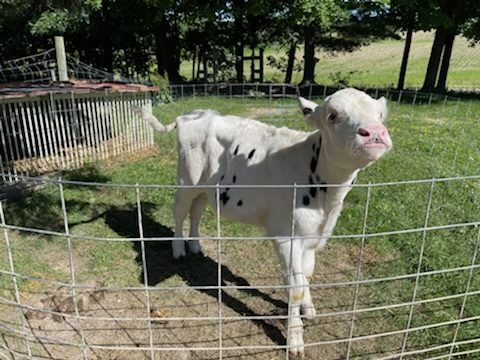
Baby Tank, our first ever calf on the farm
Then one afternoon we were picking up some pigs from another farmer. He happened to have a calf he’d bought at a bargain and asked Chris if he wanted him.
I think Chris figured one cow would satisfy my desire to have cattle on the farm.
Instead…
Tank happened.
Tank quickly became part of the family, and before long Chris understood exactly why I’d been talking about cows for so long.
Dexter's being silly
I Thought I Wanted Jerseys
Originally, I had my heart set on Jersey cattle.
I wanted a family cow.
Not because I dreamed of milking twice a day, but because I liked knowing that if I ever wanted fresh milk, I could have it.
Chris had already been reading about Irish Dexters, so when a customer mentioned Guernseys, we ended up comparing all three breeds instead of focusing on just one.
The Little Cow That Changed Everything
The first time we visited a Dexter farm, we realized these weren’t just smaller cows.
They were exactly the kind of cattle we wanted to build our farm around. I immediately appreciated their smaller size, because they weren’t big and scary.
Chris immediately started thinking like a farmer. Smaller cattle meant less impact on the land, easier handling, and more flexibility with the acreage we had available.
We don’t own hundreds of acres.
Smaller cattle put less pressure on the land, allowing us to manage our pastures more carefully while still raising enough animals to support the farm.
Another bonus?
Our herd is naturally polled, meaning our cattle don’t grow horns. That makes handling them safer for both the animals and the people caring for them.
Meet the Irish Dexter
Before we ever tasted the beef, we started learning more about the breed itself.
Irish Dexters originated in Ireland more than 200 years ago and are considered one of the world’s smallest traditional cattle breeds. For generations, they were known as the “family cow” because they provided milk, beef, and were efficient enough to thrive on small farms.
Unlike many modern beef breeds that have been selected primarily for rapid growth and maximum production, Dexter cattle have remained remarkably true to their original purpose.
That was something we appreciated.
We weren’t looking for the biggest cattle.
We were looking for the right cattle.
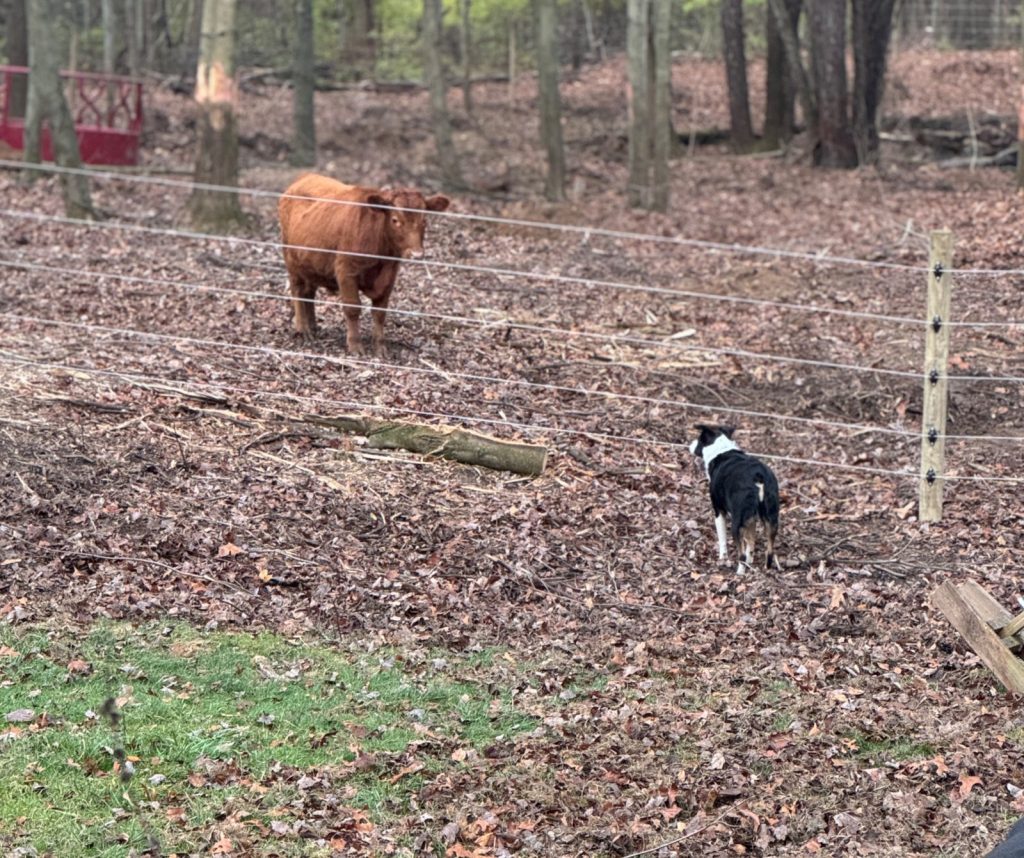
Riley and one of the Dexter's having a staring contest
A2A2
Around that same time, I had begun noticing that dairy wasn’t agreeing with me.
The farmer we were visiting explained the difference between A1 and A2 beta-casein proteins in milk and told us that Dexter cattle naturally produce A2A2 milk.
Before we purchased a single cow, I found some A2 milk to try for myself.
That was the moment these little cows went from “interesting” to “exactly what I wanted.”
(We are not currently milking our Dexter’s, but it is a goal of mine one day.)
Why Grass-Fed Takes Longer
One of the questions we get asked is why our cattle take around 28 months to finish.
The answer is actually pretty simple.
Grass contains less energy than grain, so cattle grow more slowly when they’re finished entirely on pasture.
That slower growth requires more patience from both the farmer and the customer, but for us it’s part of raising cattle the way we believe they were designed to live.
Then I Finally Tasted the Beef
Because we finish our cattle entirely on grass, patience becomes part of the process. Our Irish Dexters take around 28 months to finish.
When you’re excited to try the beef…
That feels like forever.
So we purchased a few finished Dexter steers while our own herd was growing. In 2023, I finally sat down to eat my first Irish Dexter steak.
I took one bite. Put my knife and fork down. Called Chris. And said, “We need more.”
The flavor was exactly what I’d been hoping for.
Rich. Beefy. Not oversized. Just…exceptional.
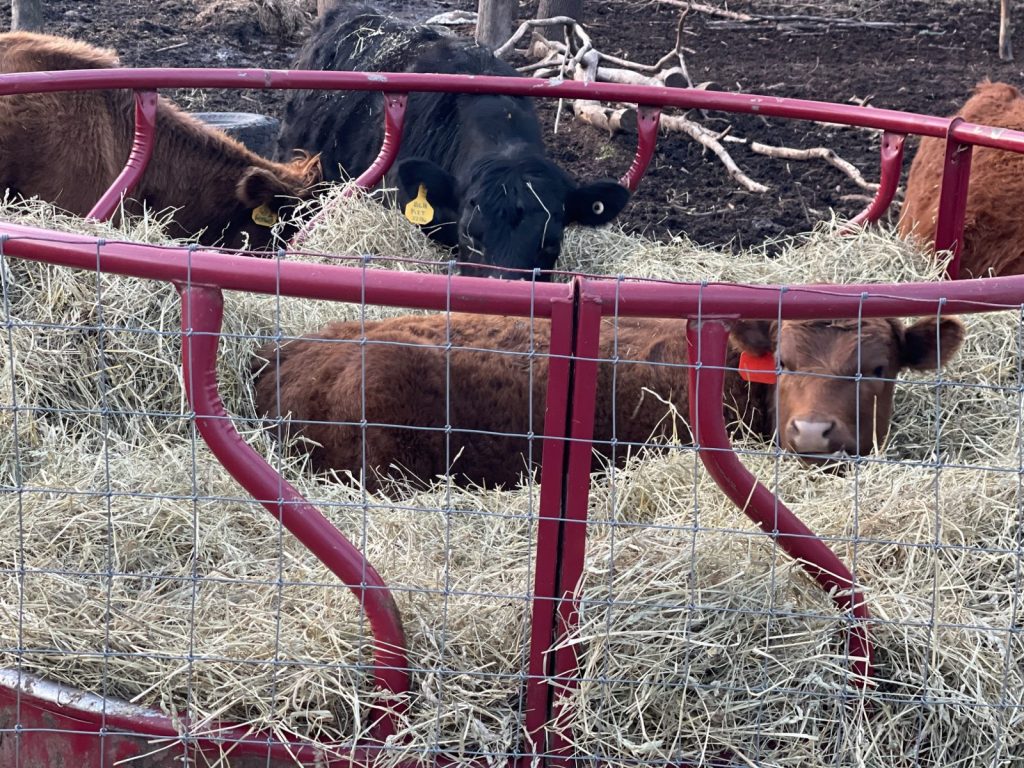
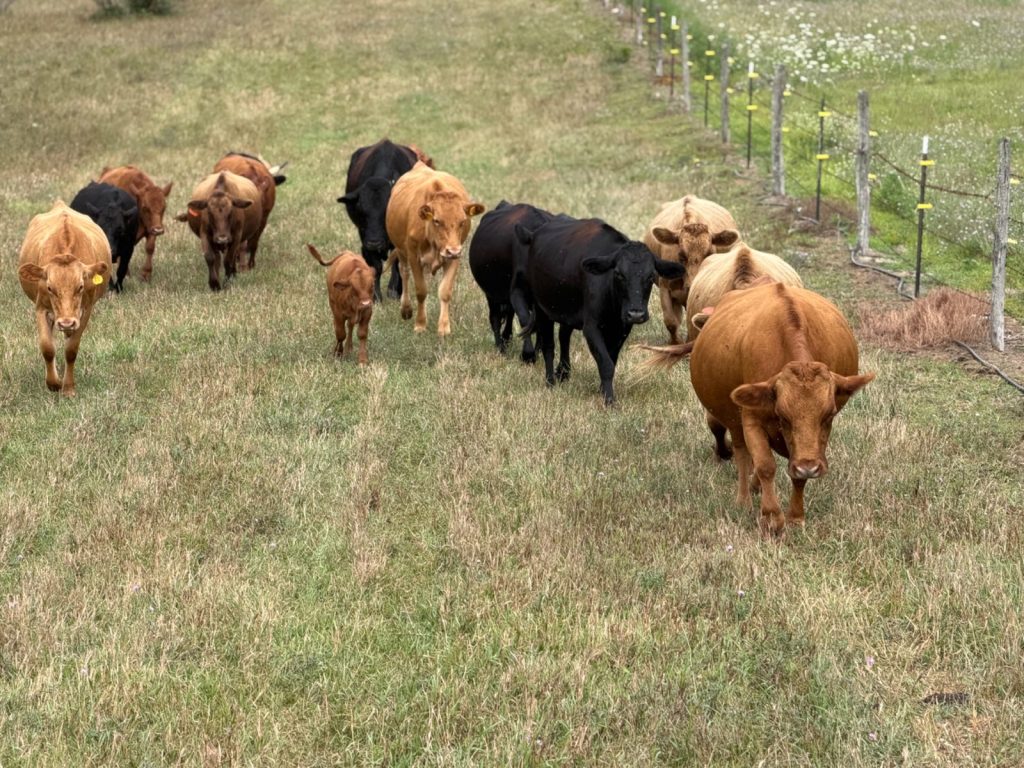
The Wagyu and Dexter Herd at Fluffy Butt Farms
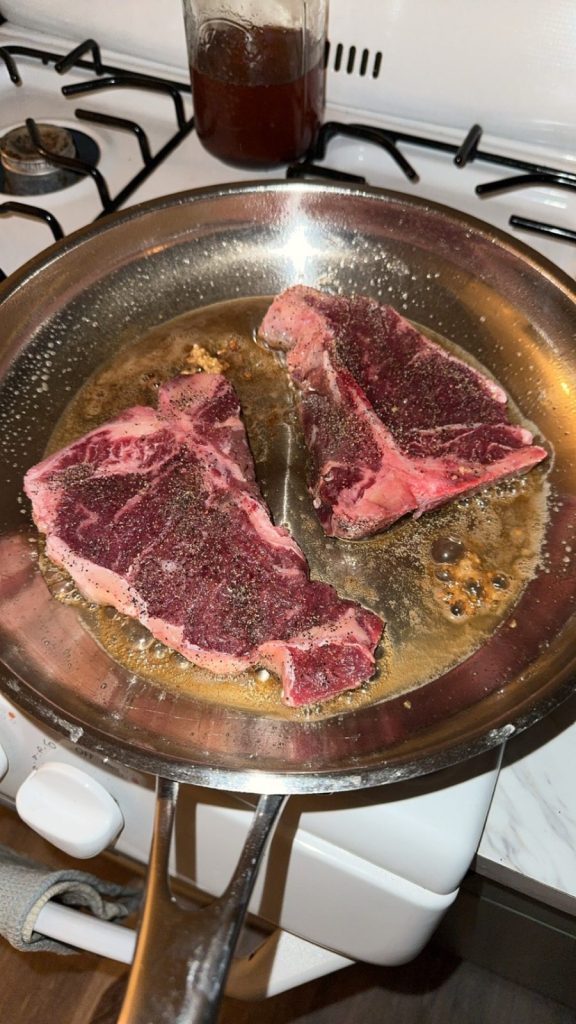
Pan Frying a Dexter Steak
Why Are Dexter Steaks Smaller?
This surprises a lot of first-time customers.
Irish Dexters are naturally smaller-framed cattle, so their steaks are naturally smaller too.
That doesn’t mean you’re getting an inferior product. It simply reflects the size of the animal itself.
For many families—and especially for couples—the portions are actually just about right.
Why We Believe in Irish Dexters
Today, our herd has grown to around 27 Irish Dexters, and we still struggle to keep the beef in stock.
Yes, the cuts are smaller than what you’ll typically find from larger commercial breeds. That’s one of the trade-offs of raising a naturally smaller animal. Sometimes I laugh when I think about how all of this started.
I just wanted a few cows to help our goats. I never imagined they’d become the heart of our farm. But here we are.
And I honestly can’t imagine Fluffy Butt Farms without them.
Even when we started researching other breeds years later, we weren’t looking for something better than our Irish Dexters. We were looking for the only breed we felt deserved to stand beside them.
Tawney Wolters is the co-owner of Fluffy Butt Farms in Battle Creek, Michigan. Alongside her husband, Chris, she raises Irish Dexter cattle, Akaushi Wagyu, Freedom Ranger chickens, and heritage pigs using regenerative farming practices. Through the Meat Education series, Tawney combines firsthand experience raising livestock with her love of cooking to help families better understand the meat on their table.