
There are a few things that have puzzled me over the years, and this is one of them.
Somewhere along the way, it seemed like everyone started calling stock “bone broth.”
As someone who learned classical cooking in culinary school, I was taught that broth and stock were different. Then social media happened, grocery store shelves filled with cartons labeled “bone broth,” and suddenly the terms were being used interchangeably.
I’ll admit it, I found myself wondering if I had missed something.
So I decided to dig into it.
The truth is, people have been simmering bones for centuries. Long before refrigerators and grocery stores, families made the most of every animal they raised. Nothing went to waste. Bones became rich stocks for soups, gravies, sauces, and stews.
The term bone broth, however, is much newer in everyday conversation. As wellness trends grew in popularity, the name “bone broth” caught on. It’s easier to market than “stock,” especially when people are drinking it by the mug instead of using it as a cooking ingredient.
That’s where much of today’s confusion comes from.
Broth is traditionally made by simmering meat, often with a small amount of bones, along with vegetables and seasonings.
It’s lighter in body, cooks more quickly, and is often enjoyed on its own as a soup or a comforting cup on a cold day.
Stock is made primarily from bones.
As the bones simmer slowly over many hours, collagen, minerals, and flavor are released into the liquid. The result is richer, fuller-bodied, and designed to become the foundation for soups, sauces, gravies, braises, and countless other dishes.
If you’ve ever chilled homemade stock and found that it turns into a soft jelly in the refrigerator, that’s exactly what you want. It’s a sign that the collagen from the bones has been extracted.
Here’s where the terminology gets interesting.
What many people now call bone broth would have simply been considered a long-simmered stock in many professional kitchens.
Today’s “bone broth” is generally cooked longer and is often seasoned so it can be enjoyed as a beverage. Functionally, it’s still built on the same idea: simmering bones to extract flavor and collagen.
In other words, the biggest difference is often how it’s used, and what it’s has been labeled, not necessarily how it’s made.
At Fluffy Butt Farms, we believe every part of the animal has value.
A package of beef bones may not look exciting sitting in the freezer, but with a little time, it becomes the foundation for incredible soups, stews, gravies, sauces, and braised meals.
It’s one of the most economical purchases you can make because one batch of homemade stock can become the starting point for several family dinners.
There’s something satisfying about taking an ingredient that many people overlook and turning it into something your family will enjoy for weeks.
If you’ve never made homemade stock before, don’t be intimidated.
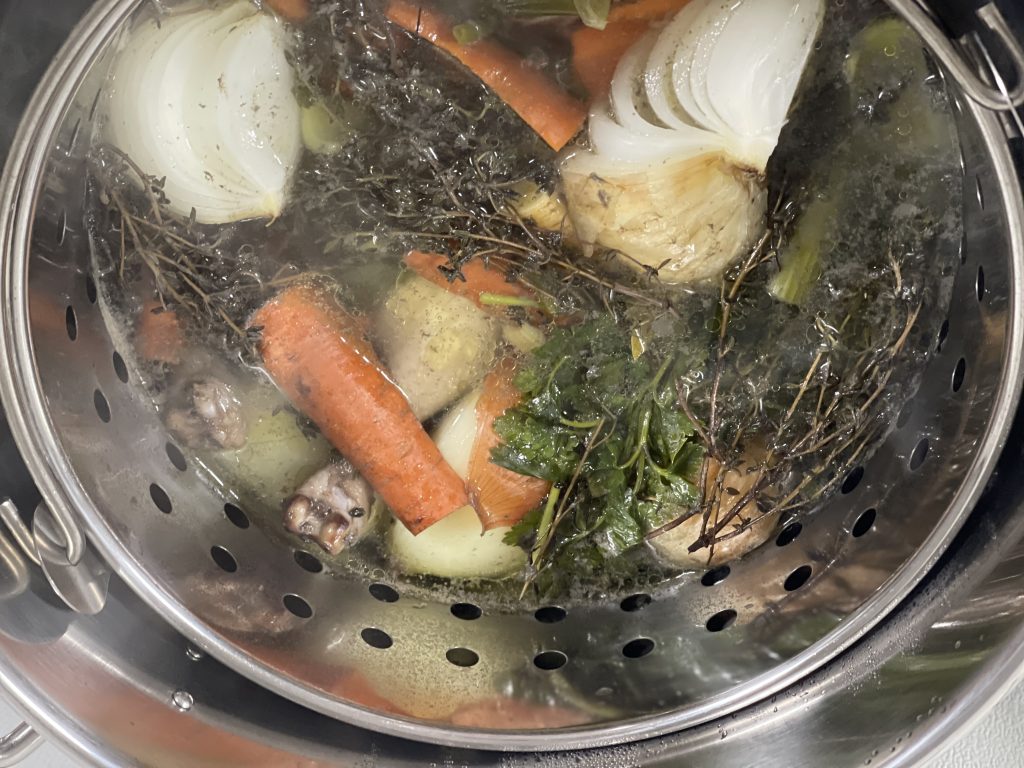
All you need are beef bones, water, a few vegetables like onion, carrots, and celery, and enough time to let everything slowly simmer. Your kitchen will smell amazing, and your freezer will thank you later.
We always keep beef bones available because we think they’re one of the most underrated ingredients we sell.
And if this article cleared up a little confusion, I’d love to know.
What kitchen question have you always wondered about?
You might just inspire the next article in our Back to Basics series.
XOXO,
Tawney