
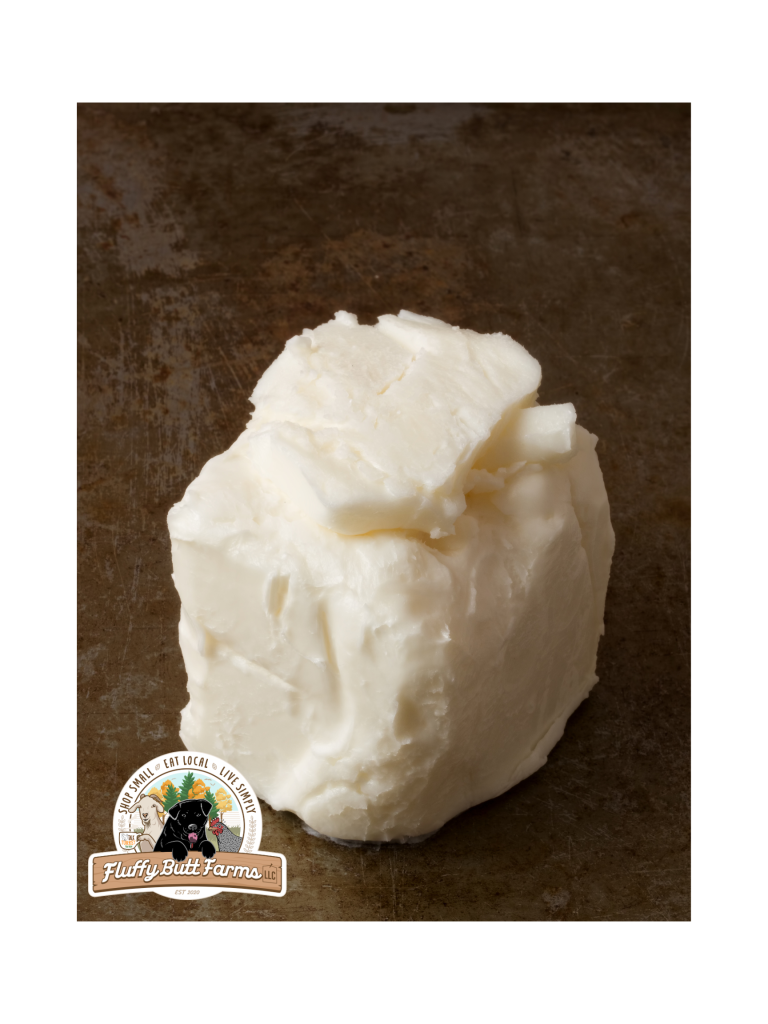
I know a thing or two about fat—cooking fat, that is. The other kind of fat is a conversation for another day. Today, we’re talking about one of my favorite ingredients in the kitchen: tallow.
Over the past few years, we started getting more and more calls asking if we sold tallow. Then vendors started popping up online and at farmers markets selling tallow this and tallow that. Before long I was seeing tallow soaps, lotions, balms, and moisturizers everywhere.
Suddenly, tallow wasn’t just something people cooked with anymore.
At one point I wanted to learn how to make tallow, more precisely I wanted to know how they got it to whip. The first YouTube channel I found was of someone collecting fat from a brisket he was smoking and called it tallow.
I saw another YouTube channel using random bits of raw beef fat to make tallow. By the third video I was completely confused.
Had I remembered culinary school wrong? I thought, genuinely thought, Tallow was strictly from Suet. So down the YouTube rabbit hole I went.
Before we go any further, let’s make sure we’re all talking about the same thing.
Suet – The hard fat surrounding the kidneys and loins.
Beef Fat – Fat trimmed from throughout the animal.
Tallow – Beef fat that has been slowly rendered (melted and purified) for cooking, baking, frying, or even skincare.
Suet has traditionally been prized for making tallow. Today, many home cooks and even commercial producers use “tallow” as a general term for any rendered beef fat.
Here’s why the source of the fat matters.
Because suet is such a clean, hard fat, it renders into a firmer tallow with a mild flavor and very few impurities. That’s one of the reasons it has traditionally been prized for rendering.
Raising both Irish Dexter cattle and Akaushi Wagyu has also given us an interesting opportunity to see firsthand how fat can vary from one animal to another—and how useful all of it can be in the kitchen.
Not exactly.
What I learned is that the traditional definition I learned in culinary school is still useful, but modern usage has broadened. Today, most people use the word tallow to describe rendered beef fat, regardless of where it came from.
For me, it really comes down to how I’m planning to use it.
If I’m using tallow on my skin, I prefer to start with suet. It renders into a cleaner, firmer tallow with a milder aroma, which is exactly what I’m looking for. (This also keeps my dog Riley from chasing me around the house because I smell like a treat).
If I’m cooking, though, I’m happy to render fat from other parts of the animal too. That richer beef flavor is fantastic for roasting vegetables, frying potatoes, or searing a steak.
We like to keep beef suet from our 100% grass-fed Irish Dexter cattle, the traditional fat used to make high-quality tallow at home. If you’ve been wanting to try rendering your own, this is where to start.
We also have larger bags of raw beef fat available from our Akaushi Wagyu herd if you’re looking for fat to render for cooking.
If you enjoy knowing more about where your food comes from, continue with our Meat Education series:
Why Irish Dexter Cattle Became the Heart of Fluffy Butt Farms
Meet the little heritage cattle that unexpectedly changed the direction of our farm.
Why We Added Akaushi Wagyu to Fluffy Butt Farms
Learn why Akaushi was the only other beef that met the standard our Irish Dexters had set.